
My Chickadee Problem
Leaning into the mysteries and grief of the natural world.

In December, a sick chickadee took refuge on our back porch during a rain storm. It was soaking wet and shaking, and John could get his hand very close to it without it flying away. When John told me about the chickadee, I was concerned that this was a rare case of a smaller bird having avian flu. This would be horrible because the chickadee would almost certainly die, our chickens would be at risk, and we would have to be extremely careful about handling it and everything it touched so as not to infect other birds, ourselves, or our cat (Cats have up to 90% fatality rate with bird flu). John and I watched as it shivered in the rafters, occasionally grooming its wet feathers.
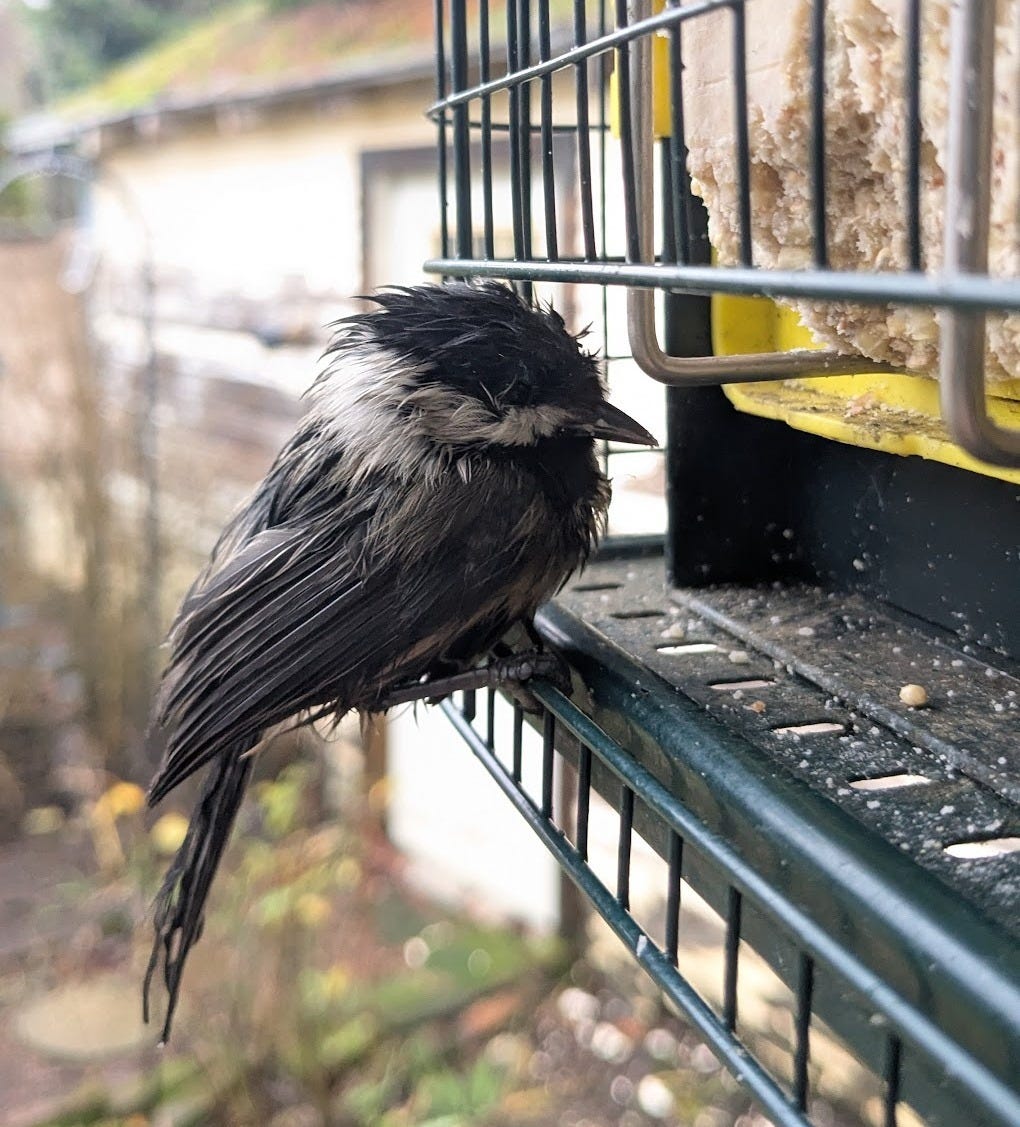
I left for piano lessons and acupuncture, but was anxious to hear back from John about whether or not we needed to take it to the wildlife care center. The folks at the care center had told us to bring it in if it stayed the same or got worse, and it notably got a bit better. It perked up a little bit, eat some suet, drank some water, bopped around our wind chimes. I now believe it was a nearby window collision that left the bird stunned in the pouring rain. It was a relief when it became more active, and an honor that it took refuge in our home, where it could be safe while it recovered. Still, I was nagged by the question, “Is it better enough?”
The chickadee dried off, then hung out on the lilac bush nearby. It came back to our porch a few times to take refuge. By nightfall, it was gone. We never saw it again, and I’m not sure if it fully recovered or if it died later that night. We’ll never know, really.
Many naturalists take a hands-off approach to wildlife, of letting nature take its course. The hawks will snatch up the cute ducks in the pond. Not all the baby birds, squirrels, fawns will survive. It is hard for me not to wince at these inevitabilities, even though I know that this is not cruelty or immorality. Some people make exceptions for human-caused injuries and illnesses: If that chickadee was harmed because of a window collision, we are more obligated to help it because humans caused the problem and windows aren’t natural.


But I also think this approach makes us lean into the unknown and question what is for the creature’s wellbeing, and what is actually for our own comfort. If we took that chickadee to the wildlife care center, I would know if it lived or died. I would know that it was probably head trauma. I wouldn’t be left wondering, nearly a month later. But knowing all of those things would help me and my anxiety, not necessarily create a better outcome for the chickadee.
And now, we get to decide what the ending is. This morning, there were 6 or 7 black-capped chickadees at my suet feeder — the same suet feeder where that soaked, injured chickadee took refuge. They fluttered around and perched on our wind chimes just like our bird did a month ago. Who is to say we aren’t getting regular visits from that bird every day; we just don’t know it? And even if that isn’t the truth, I’m grateful that it sought refuge with us when it needed a little bit of food and safety from the rain. That, ultimately, is what community care requires: tenderness in spite of all the heartaches and unknowns.
Happy new year.
Oh, dear little Chickadee! I will imagine that it got well after sheltering in your safe space, and was one of the ones who returned.
Last spring I was taking a zoomed in photo of a bunny in our yard with my birding camera, and when I looked at the photos later I saw it had a horrible neck wound, all swollen! I was convinced it wasn't long for this world, but he survived all summer, the wound & swollen neck gradually going down. I hope he's still out there, hunkered down in the snow. Nature can be fleeting, and also so resilient too. Just like everything.