
Counting Ducklings
The aches and boons of a growing season.

This is the time of year when our yard is the most lush. We have flowers blooming of many different colors — the peonies, the columbine, the fuchsia, the roses, the beginnings of our penstemon, the monkey flower. Things have not dried out yet — we have been blessed with a few late spring rains after a very warm early season — and we’re seeing every shade of green. Warblers have visited our tiny yard pond. I’ve heard the pitick of the western tanagers flying overhead, the buzzy chatter of the vaux’s swifts circling, the high-pitched squeals of the cedar waxwings, each flying overhead in bigger flocks than the last. I would like to travel more, see more of the world, see new plants and habitats and new ways to live. But late May/early June, I want folks to come to me. Bask in the chickens moving along their little highway in our yard. Notice all the colors here: not just the blooms, but the iridescent green of the sweat bees, how the lupine pollen on the bumble bees is bright orange on their legs, how the goldfinches are as lemony yellow as they will be all year, how the sky is just so blue overhead. Of course, this time of year brings many rare birds during spring migration, and I have logged a couple of them.
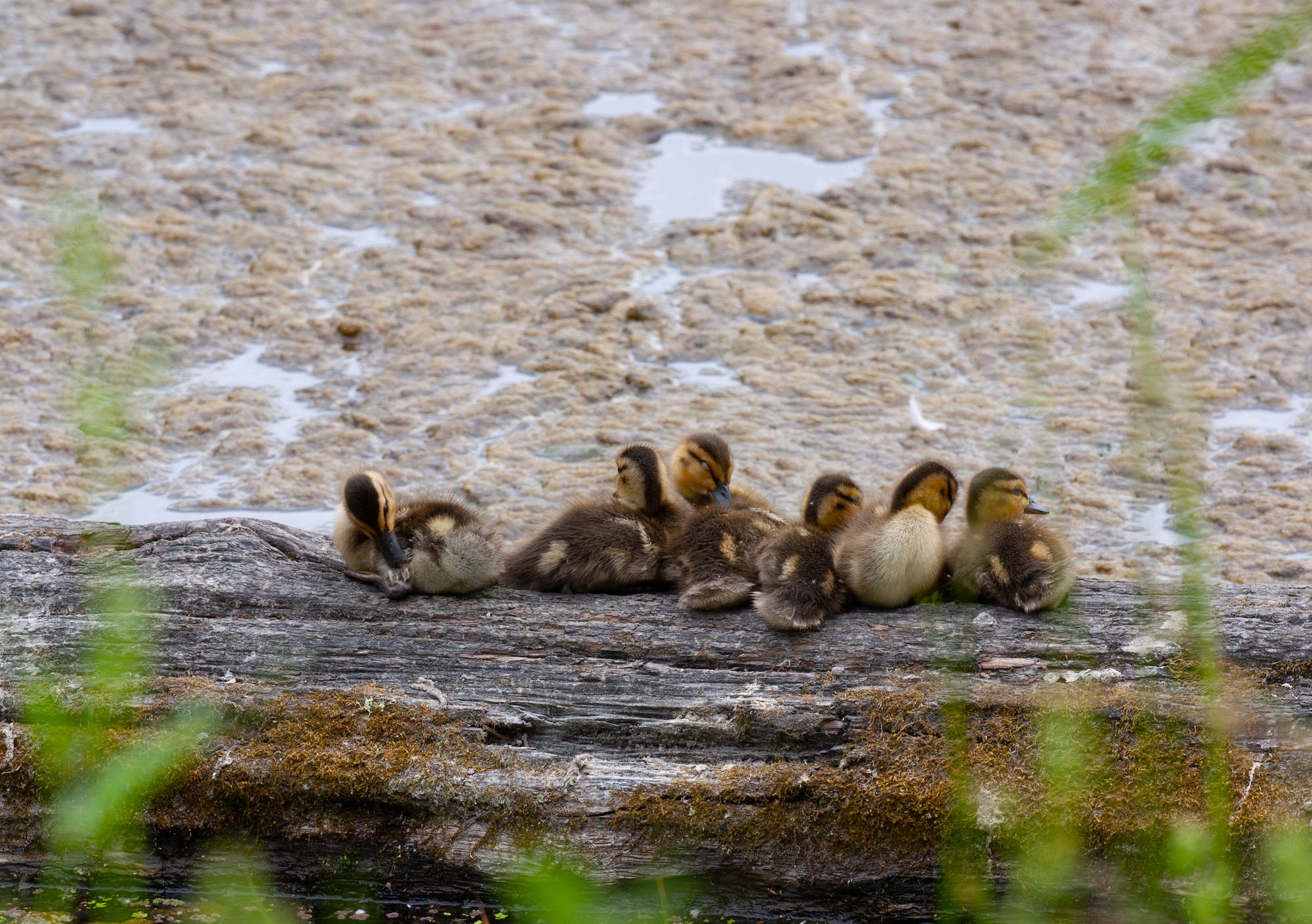
But this time of year also makes me ache. I hate counting the ducklings at my local park because I have to deal with the fact that there will almost certainly be less of them than the last time I counted. So many nests raided. So many hawks flying overhead. Bumblebees are smaller in my yard this year, meaning there was less quality food sources available to them.
I know that the hawks must eat, that ducks have so many babies as a survival strategy for the species, that even if I don’t look or count or check on that nest, the fate of those creatures are whatever they’re going to be. I know that this is the fallacy of looking at individuals than the larger whole.
But the whole is also bleak, for different reasons. Many of us know that the insect population as a whole is in rapid decline, due to climate change, extensive use of pesticides, and loss of habitat (among other things). And this is the canary in the coal mine for all biodiversity, and of particular importance for those who love birds. I recently spoke with someone who had been birding in the Portland area for perhaps longer than I have been alive, and we were lamenting the lack of flycatchers this year. She mentioned she hadn’t had a great fallout of birds at all for several years — the numbers are way down, across the board.
Flycatchers, true to their name, eat primarily insects that fly. So, of course they will be among the first to die out, if their food source is under duress. But most birds, regardless of their preferred food as adults, feed their babies insects. Most bees typically only fly about 500 feet in any given day, so they need sources of food close to home, all season long—not just ornamental plants but native plants that coevolved alongside our local pollinators. And if we are using pesticides in our yards, the runoff may eventually go to our streams and waterways, killing salmon and salamanders and so much more. I think often about the Seventh Generation Principle — the Haudenosaunee philosophy that we should be making decisions in service of not just ourselves and our children, but for folks seven generations in our future. Perhaps I am preaching to the choir.
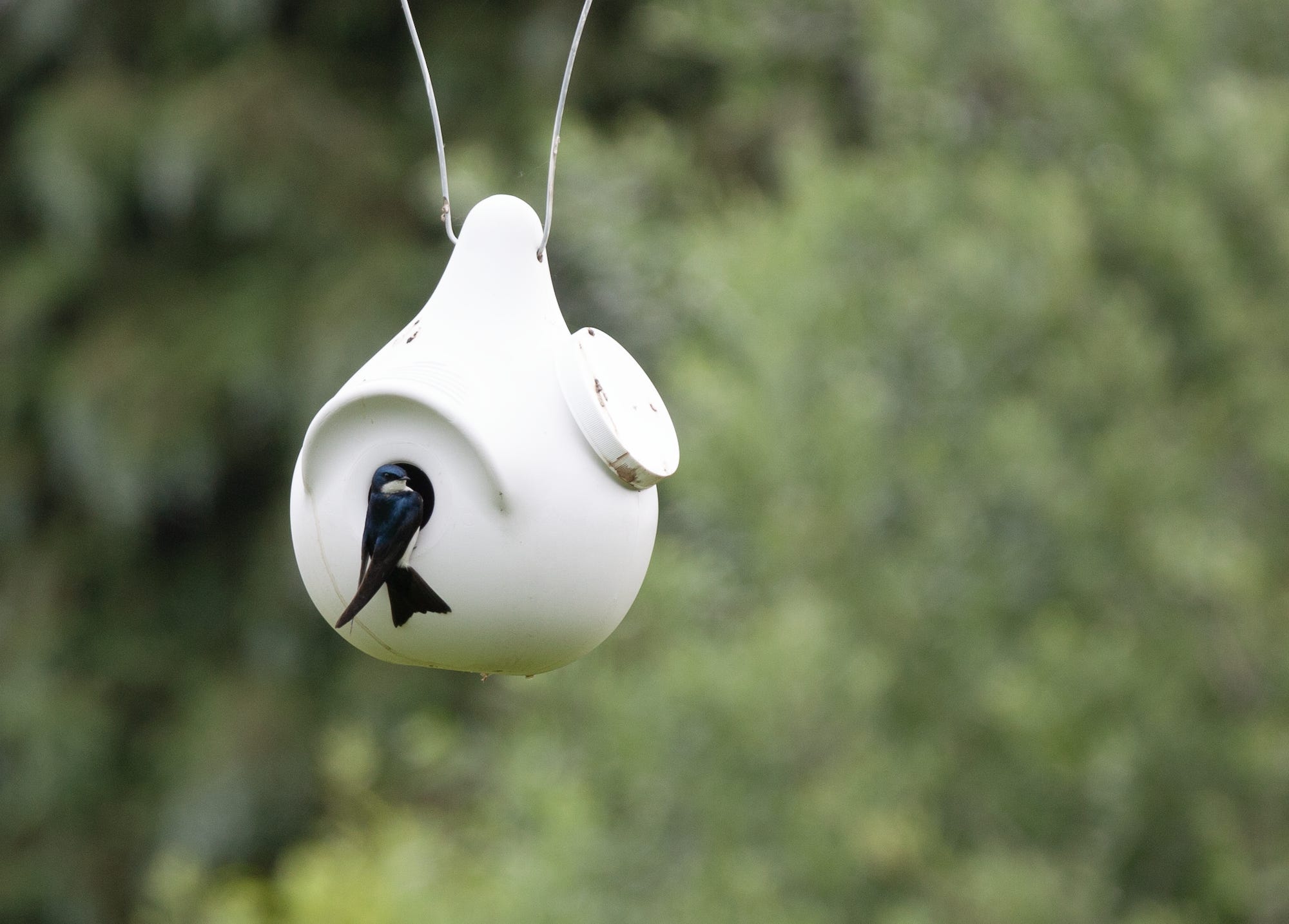
So, I tend my little patch of yard. We removed most of our monoculture lawn and planted native flowers, shrubs, and trees throughout the property. We added a small pond with shallow areas for pollinators and a waterfall function to attract the birds. Each year, I assess our gaps in native plant blooms across the season and plant more to fill that gap in the fall. We are seeing more birds and more insects each year we are at this house. I am logging the insects, identifying the bees and hover flies and dragonflies and keeping notes. A chickadee has excavated a cavity in one of our trees to nest in our backyard. I hold my breath.
i feel these aches and pains and fears and hopes in my soul as in yours, friend. 🖤 thanks for sharing this and keep up the good work.